
📩 In Today’s Email
TL;DR: What does an $189 dinner date say about recent scrums over America being in decline?
YouTube Companion Video: Alone in Medellín - on loneliness abroad, and what actually helps.
The Deep Dive: When did going on a date become a financial decision?
The Stream: Shakira retains her crown as queen of the World Cup.
VisaWatch™️: Global mobility intel across visas, tax, and risk.
The Read: Martyr! by Kaveh Akbar

🤿 The Deep Dive
A first date in America now costs $189.
That’s the county-wide average, not the chef’s seats at Joseph Leonard in the West Village average. All in: dinner, drinks, transportation, whatever grooming ritual you put yourself through beforehand. It went up 12.5% from last year. Economists have a name for it: date-flation. It’s outpacing regular inflation by a wide margin, which means the cost of trying to meet someone is rising faster than the cost of everything else that’s already too expensive.
In London it’s just as bad. The average date night there runs about £104. A coffee date, just coffee, is £44. The city that gave us pubs, where you could sit across from someone for three hours over a pint and call it a night, now charges you £44 for the casual version.
The result is predictable. About 69% of Americans aren’t dating regularly anymore. Nearly half say it’s simply not worth it financially. This is on top of a population already in freefall on marriage and birth rates, and a generation of young men who’ve spent so much of their social lives online that asking someone out in person has become a skill nobody taught them and a risk many won’t take.
I’ve been based out of Medellin for a while now. A date here can be a walk. A parque. Someone brings a speaker, someone else shows up with aguardiente (the local spirit). Maybe the date goes into a group or runs into people one of them know, a few friends chip in a couple thousand pesos for snacks (a “vaca,” as they call it) and suddenly it’s an evening. The connection didn’t require a reservation or credit card. It just required showing up.
I’m not romanticizing poverty. Colombia has serious economic problems (it has the largest gap between the rich and the poor in all of Latin America, for example) and nobody here is grateful to be broke. But there is something that happens in places where people have always had less: they figure out how to be together without outsourcing it. They build the infrastructure of human connection themselves, with whatever’s available. In the US and the UK, we got convinced somewhere along the way that experiences don’t count unless you pay for them. And quietly, without anyone announcing it, that logic started applying to people, too.
Our president was sitting across from his Chinese counterpart two weeks ago at a summit in Beijing. In his opening remarks, the host invoked an ancient Greek theory about what happens when a rising power challenges an established one. The subtext wasn’t subtle. The message was: we are ascending. You are not. Let’s figure out how to handle that without catastrophe.
Our president came home and posted on Truth Social. And here’s the thing. He agreed. “Two years ago, we were, in fact, a Nation in decline. On that, I fully agree with President Xi.” He had said something similar at Davos in January. Same conclusion, different stage.
The escape hatch, of course, was the last guy. It happened on his watch, not mine. Clean hands.
I’m not interested in that argument. What I’m interested in is the admission, sitting in plain text on Truth Social. A sitting American president, at a summit with China, conceding the decline. And the fastest thing he could do was find someone else to pin it on.
That reflex is the story.
Because the $189 date isn’t a this-guy problem or a last-guy problem. It didn’t appear in four years. It’s the end product of a culture that slowly monetized everything, including the basic human act of sitting across from someone you might want to know better. The loneliness epidemic, and it is an epidemic (the Surgeon General said so) didn’t come from one administration. It came from decades of engineering life in a way that made genuine human contact expensive, inconvenient, and optional.
Decline is a $44 coffee date. It’s 70% of people deciding romance isn’t in the budget. It’s two world leaders sitting in Beijing politely agreeing on something that everyone who lives it already knows.
I left. Not because I’ve given up on America. I haven’t. I’m a Texan and that’s not in our DNA. But I wanted to live somewhere that hadn’t yet been priced out of the ordinary pleasures. Sitting in a park. Running into someone. An evening that cost nothing and meant something.
The $189 date is a symptom. The question your newsletter exists to answer is: a symptom of what, exactly, and what do you do about it?
We’ll keep working on that one together.
Even after all this time the sun never says to the earth, 'you owe me.' Look what happens with a love like that. It lights the whole sky.
🍿 The Stream
Shakira just dropped Dai Dai for the World Cup. This is her 4th World Cup song, so she’s played almost as many as Messi now, and a lot more than Pique!
If you want more of this world, Latin American culture, Colombian slang, Medellín life, I cover it constantly over on Instagram. Come find me there.
📣 Newsletter News
Prefer listening? The full audio version of this issue, as well as all past issues, is now available on the website.
Quick favor: if this email landed in spam or promotions, please move it to your primary inbox so you never miss an issue.
🌎 VisaWatch™
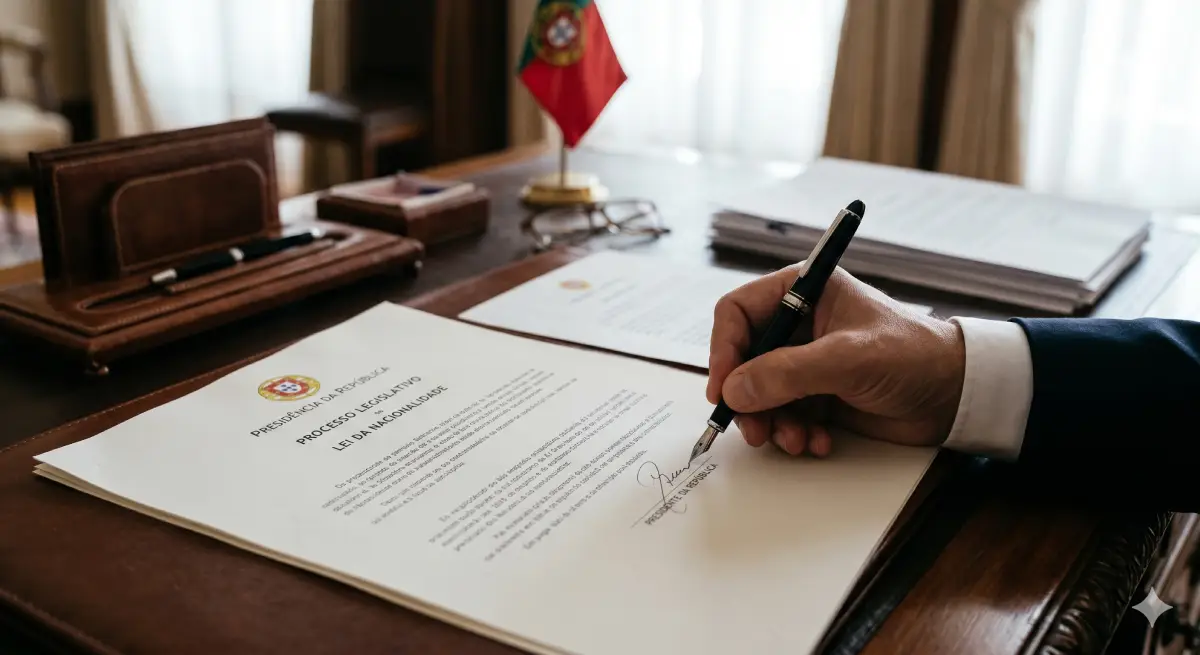
🇵🇹 Portugal — Portugal's president signed a revised nationality law this month extending citizenship eligibility for Golden Visa holders from 5 to 10 years — the residency permit is unchanged, but the passport just got further away.
🇱🇰 Sri Lanka — Launched its digital nomad visa in February: one year renewable annually, $2,000/month minimum income, apply through the Department of Immigration online.
🇯🇵 Japan — 6-month non-renewable digital nomad visa, ~$68,000 annual income required — a cultural deep dive, not a long-term base.
🇲🇾 Malaysia — Consistently ranked the top digital nomad destination in Asia for cost-to-infrastructure ratio, with one of the lowest income thresholds in the region.
🇬🇷 Greece — The FIP retirement visa requires €3,500/month or €126,000 in savings for 3-year renewable residency, with a path to citizenship after 7 years.
🇧🇷 Brazil — One of the most accessible nomad visas in the Americas: $1,500/month or $18,000 in savings, valid up to 2 years, with a growing community in Florianópolis and Rio.
Check your target country’s official immigration page for exact income thresholds and application windows. They move quickly.
🤓 The Read - Martyr! by Kaveh Akbar

Kaveh Akbar is a poet. You feel it on every page of this novel. Certain sentences stop you cold and you have to sit with them before moving on. That's what poets do when they write fiction. You don’t learn that in an MFA workshop.
The setup: Cyrus Shams, newly sober, son of Iranian immigrants, is obsessed with martyrs. People who made their deaths mean something. He's compiling a book about them while quietly wondering if his own life means anything at all. His mother's plane was shot down over the Persian Gulf in a senseless accident nobody was ever held accountable for. His father spent his American life killing chickens at a Midwest factory farm. Cyrus inherited all of this grief without inheriting the positive sides of the country.
The heart of the book and the scenes I kept thinking about are when Cyrus starts visiting a dying artist named Orkide who is living out her final days as a public exhibit at a Brooklyn museum. You can go talk to her. Just show up and sit across from a woman who is dying and knows it and has decided to make the dying into art. Cyrus keeps coming back. What happens between them in those conversations is where Akbar earns everything the novel promises.
I've spent real time around the Persian diaspora. Years in LA, friends and coworkers from that world, a colleague from Isfahan who used to describe it the way people describe places they grieve rather than places they're from. The city of gardens…. Tehrangeles is real. The community, the food, the specific texture of a culture that was one of the great civilizations on earth and now exists mostly in Beverly Hills and on Westwood Boulevard, displaced and preserved in amber. I have eaten donbalan (look it up!), and it turns out you can eat about anything cooked in garlic and with enough salt and lime squeezed over it, wrapped in lavash. Someone you trust has to put it in front of you first. That's Persian hospitality. Akbar writes from inside that inheritance without making it a lesson.
If you apply the ancient Greek framework of rising and declining civilizations, Persia has already been through it. Completely. The catbird seat, the long fall, the diaspora. Cyrus isn't anxious about decline the way Americans are anxious about decline. He was born into the wreckage of it. That's a different psychology entirely.
The addiction thread, the pills, the alcohol, the sobriety that is always one bad night from unraveling, is handled without sentimentality. Akbar has lived it and it shows. Poets can't poet on Percocet. Though this is the third book in a row I've read where a brilliant creative person is being destroyed by substances. Next month I'm finding something where everyone is fine. Maybe something with a talking dog. We'll see.
Travel isn’t always pretty. It isn’t always comfortable. Sometimes it hurts, it even breaks your heart. But that’s okay. The journey changes you It should change you. It leaves marks on your memory, on your consciousness, on your heart, and on your body. You take something with you. Hopefully, you leave something good behind.
🛤️ Outtro
If something in here stayed with you, pass it on. The right essay finds the right person. Help it along.
See you next week. Don’t Escape. Design.
Ask Birdbrain GPT (Powered by Yours Truly, Rio)
Rio is a hummingbird who's been everywhere and trusts almost nothing he reads online. Ask him about visas, nomad life, or whatever the travel blogs are getting wrong this week.

Edward McWilliams II
